Lets Come Together to Check Our Work Image Clip Art
Think GIF is the nearly succulent kind of peanut butter? And AI was that weird sci-fi movie starring Haley Joel Osment? Well, you're non wrong. But today we're talking image formats and all those pesky lilliputian files that we employ to create visual content for print and web.
Every graphic you lot see online is an epitome file. Virtually everything you lot see printed on paper, plastic or a t-shirt came from an epitome file. These files come up in a variety of formats, and each is optimized for a specific utilise. Using the right type for the right job means your design will come up out moving-picture show perfect and only how you intended. The wrong format could hateful a bad print or a poor web image, a behemothic download or a missing graphic in an email.
So allow's pause it downward. Welcome to Prototype File Formats 101. Permit's dive into the basics of each file type.
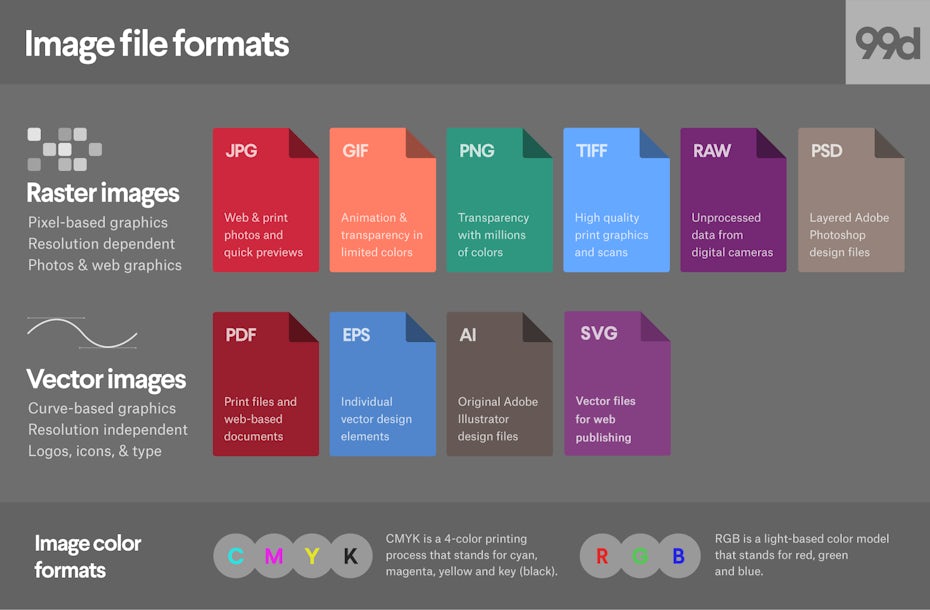
Most epitome files fit into one of two general categories—raster files and vector files—and each category has its own specific uses. This breakdown isn't perfect. For example, sure formats tin can actually incorporate elements of both types. Just this is a good place to first when thinking about which format to apply for your projects.
The unlike types of epitome file formats
—
- Raster file formats
- JPEG
- GIF
- PNG
- TIFF
- RAW
- PSD
- Vector file formats
- EPS
- SVG
- AI
Raster file formats
—
What is a raster image
Raster images are made upwards of a prepare grid of dots called pixels where each pixel is assigned a color. Unlike a vector epitome, raster images are resolution dependent, meaning they exist at one size. When yous transform a raster epitome, you stretch the pixels themselves, which can result in a "pixelated" or blurry image. When y'all enlarge an prototype, your software is essentially guessing at what epitome data is missing based on the surrounding pixels. Mostly, the results aren't great.
Raster images are typically used for photographs, digital artwork and spider web graphics (such as banner ads, social media content and email graphics). Adobe Photoshop is the industry-standard paradigm editor that is used to create, pattern and edit raster images as well as to add furnishings, shadows and textures to existing designs.
CMYK vs. RGB
All raster images tin can be saved in i of ii master color models: CMYK and RGB.
CMYK a four-color printing process that stands for c yan, m agenta, y ellow and k ey (black). These colors stand for the four inks that will combine during the printing process. Files saved in this format will exist optimized for physical press.
RGB is a light-based color model that stands for r ed, chiliad reen and b lue. These are the three master colors of light that combine to produce other colors. Files saved in this format will be optimized for the web, mobile phones, moving picture and video—anything that appears on a screen.
Lossy vs. lossless
Each raster image file is either lossless or lossy, depending on how the format handles your image data.
Lossless image formats capture all of the data of your original file. Nothing from the original file, photo, or piece of art is lost—hence the term "lossless." The file may yet be compressed, merely all lossless formats will be able to reconstruct your image to its original state.
Lossy prototype formats approximate what your original image looks like. For example, a lossy image might reduce the amount of colors in your prototype or clarify the image for any unnecessary data. These clever technical tricks will typically reduce the file size, though they may reduce the quality of your paradigm.
Typically, lossy files are much smaller than lossless files, making them platonic to employ online where file size and download speed are vital.
JPEG/JPG
JPEG is a lossy raster format that stands for Joint Photographic Experts Group, the technical squad that developed information technology. This is one of the nigh widely used formats online, typically for photos, email graphics and large spider web images similar banner ads. JPEG images have a sliding scale of compression that decreases file size tremendously, but increases artifacts or pixelation the more than the image is compressed.
You should apply a JPEG when…
- You're dealing with online photos and/or artwork . JPEGs offer you the nigh flexibility with raster editing and pinch making them platonic for web images that demand to be downloaded rapidly.
- You want to impress photos and/or artwork . At high resolution files with low compression, JPEGs are perfect for editing and then press.
- You demand to send a quick preview image to a customer. JPEG images can exist reduced to very small sizes making them keen for emailing.
Don't utilize a JPEG when…
- You lot demand a web graphic with transparency. JPEGs exercise non take a transparency channel and must have a solid color groundwork. GIF and PNG are your best options for transparency.
- You need a layered, editable paradigm. JPEGs are a flat image format meaning that all edits are saved into one image layer and cannot be undone. Consider a PSD (Photoshop) file for a fully editable prototype.
GIF
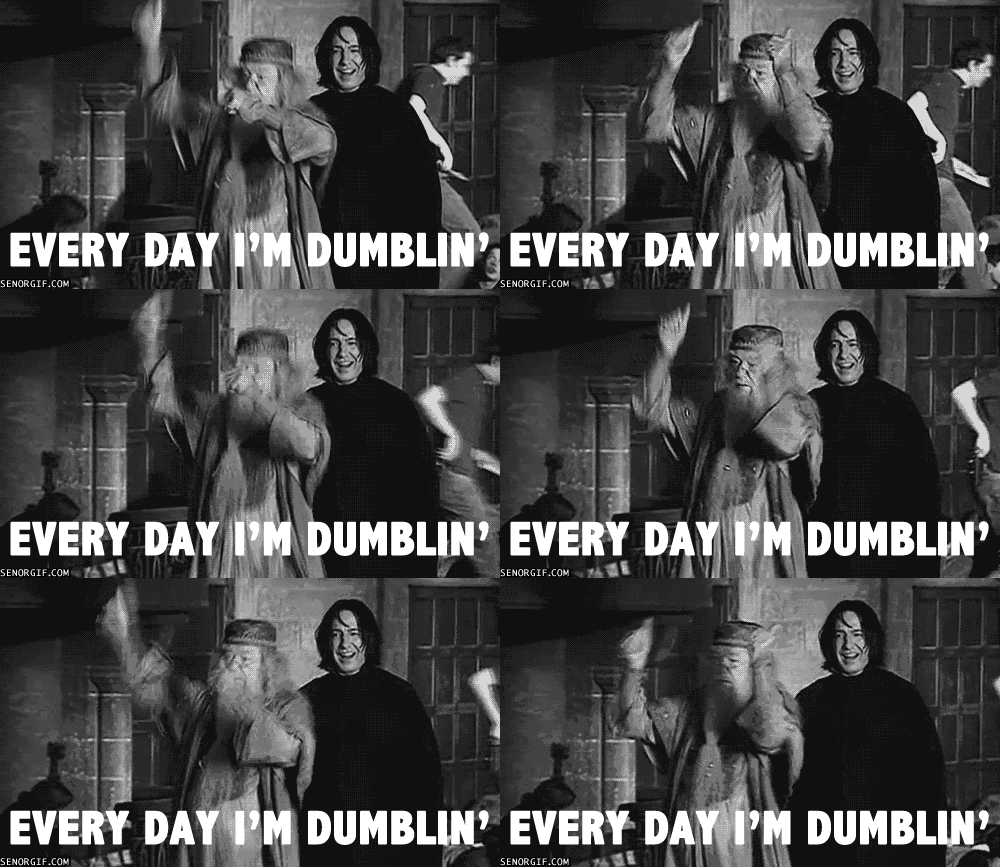
GIF is a lossless raster format that stands for Graphics Interchange Format. The large question: how is it pronounced? The creator of GIF says "Breath" like the peanut butter. This writer (and lots of the world) says "GIFF" because graphics starts with a "guh." Anyway, we'll leave that up to you. GIF is also a widely used web epitome format, typically for blithe graphics like banner ads, electronic mail images and social media memes. Though GIFs are lossless, they can be exported in a number of highly customizable settings that reduce the amount of colors and paradigm data, which in turn reduces the file size.
You should use a GIF when…
- Yous desire to create web animation . GIF images concur all of the animation frames and timing information in one single file. Epitome editors like Photoshop make it easy to create a short animation and export it as a GIF.
- You need transparency . GIF images have an "alpha channel" that can be transparent, so you can place your paradigm on any colored background.
- Y'all need a small-scale file . The compression techniques in the GIF format allow epitome files to compress tremendously. For very simple icons and web graphics, GIF is the all-time epitome file format.
Don't apply a GIF when…
- You need a photographic-quality image. Though GIFs can exist high resolution, they have a limit of 256 colors (unless you know a few tricks). Photos typically have thousands of colors and will look flat and less vibrant (and sometimes weird due to color banding) when converted to GIF.
- Yous demand to print an paradigm. Because of the color limit, most printed photos will lack depth. If you need to print photos, look at TIFF, PSD and JPG.
- You need a layered, editable image. GIFs are a apartment image format significant that all edits are saved into one prototype layer and cannot exist undone. Consider a PSD (Photoshop) file for a fully editable image.
PNG
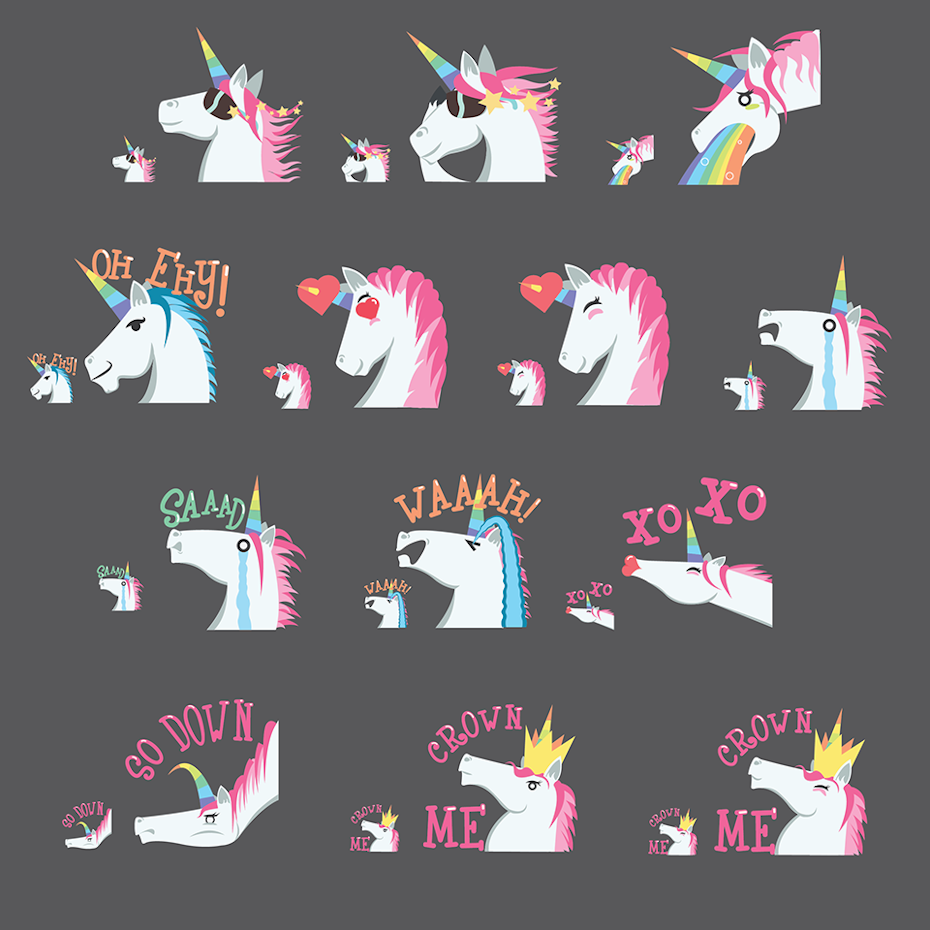
PNG is a lossless raster format that stands for Portable Network Graphics. Recollect of PNGs equally the next-generation GIF. This format has built-in transparency, only can also display higher color depths, which translates into millions of colors. PNGs are a web standard and are quickly becoming one of the nearly common image formats used online.
Yous should use a PNG when…
- You need high-quality transparent web graphics . PNG images take a variable "alpha channel" that can accept any degree of transparency (in contrast with GIFs that but have on/off transparency). Plus, with greater color depths, you'll have a more vibrant image than you would with a GIF.
- You have illustrations with limited colors . Though any image will work, PNG files are best with a small-scale colour palette.
- Yous need a small file . PNG files can shrink to incredibly tiny sizes—particularly images that are simple colors, shapes or text. This makes information technology the ideal image file type for web graphics.
Don't use a PNG when…
- You lot're working with photos or artwork. Thanks to PNGs' high color depth, the format can hands handle loftier resolution photos. However, considering it is a lossless spider web format, file sizes tend to get very large. If you're working with photos on the web, go with JPEG.
- Yous're dealing with a print projection. PNG graphics are optimized for the screen. Yous can definitely print a PNG, but you'd exist meliorate off with a JPEG (lossy) or TIFF file.
TIFF/TIF
TIFF is a lossless raster format that stands for Tagged Image File Format. Because of its extremely loftier quality, the format is primarily used in photography and desktop publishing. Yous'll likely encounter TIFF files when you scan a document or accept a photo with a professional digital camera. Exercise note that TIFF files tin can too be used as a "container" for JPEG images. These files volition be much smaller than traditional TIFF files, which are typically very large.
Y'all should utilise a TIFF when…
- You need high-quality print graphics. Along with RAW, TIFF files are amongst the highest quality graphic formats bachelor. If y'all're printing photos—especially at enormous sizes—use this format.
- You lot are making a high-quality scan. Using TIFF to scan your documents, photos and artwork volition ensure that you have the best original file to work off of.
Don't use at TIFF when…
- You're working with spider web graphics. While many spider web browsers support it, TIFF files are optimized for print. Go with JPEG or PNG when yous need to display loftier-quality images online.
RAW
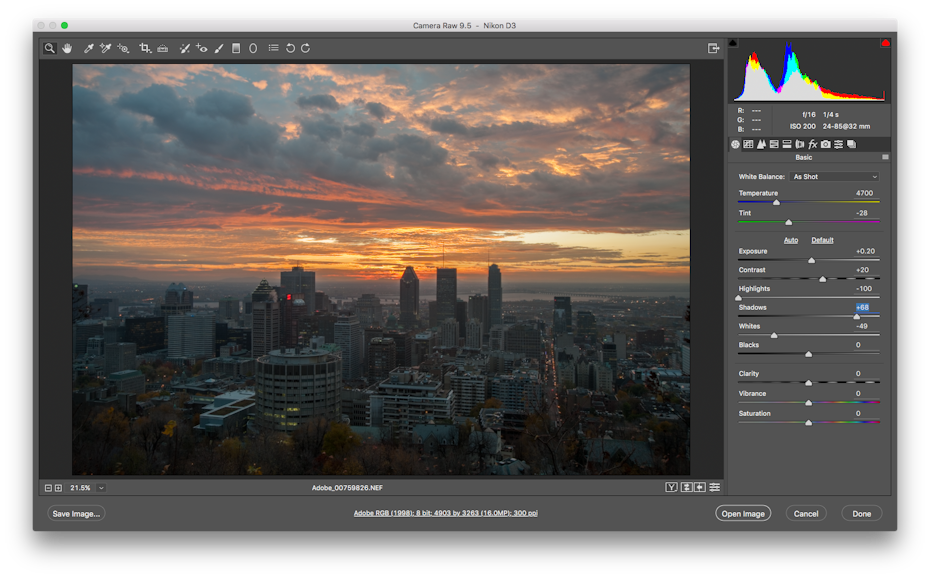
A raw paradigm format contains the unprocessed data captured by a digital camera or scanner's sensor. Typically, images are processed (adjusted for color, white rest, exposure, etc.) and and so converted and compressed into another format (e.chiliad. JPEG or TIFF). Raw images store the unprocessed and processed information in two separate files, and so you're left with the highest quality epitome possible that y'all tin edit non-destructively with a photo editing application similar Photoshop. In that location are dozens and dozens of raw formats, merely some of the typical formats are CRW (Canon), NEF (Nikon), and DNG (Adobe).
You should utilize RAW when…
- Yous are shooting and editing photos . Make certain your photographic camera is set to RAW so you can capture the most versatile paradigm. Then, use a compatible photo-editing application to adjust your image.
Don't use RAW when…
- Y'all're working with web graphics. RAW is built for photo editing. When you're gear up to present your photos for the web, convert them to JPEG.
- Y'all're ready to print your photos. Many printers won't accept raw formats, then first convert to JPEG or TIFF.
PSD
PSD is a proprietary layered epitome format that stands for Photoshop Document. These are original design files created in Photoshop that are fully editable with multiple layers and image adjustments. PSDs are primarily used to create and edit raster images, but this unique format can also contain vector layers as well, making it extremely flexible for a number of different projects. A PSD tin be exported into any number of image file formats, including all of the raster formats listed to a higher place.
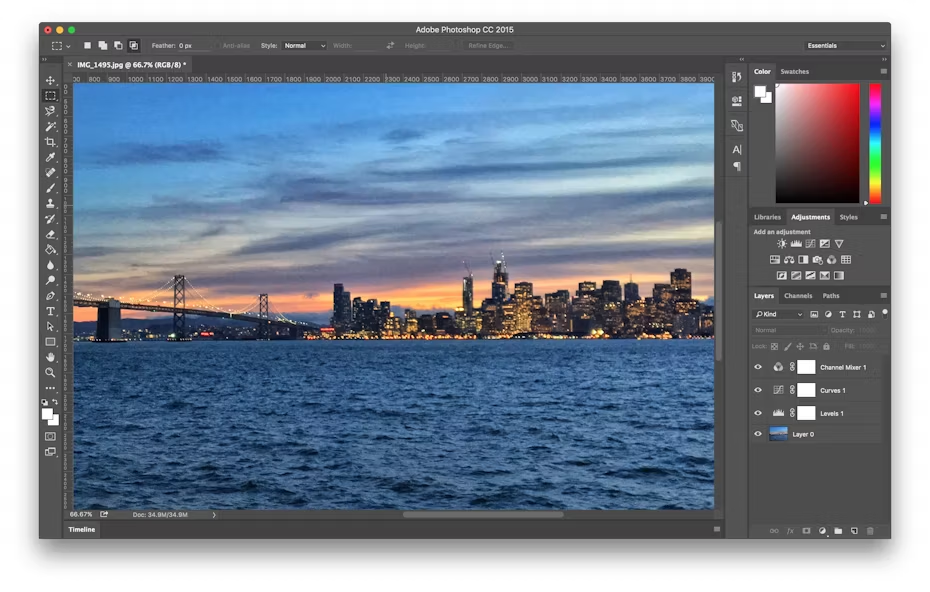
Y'all should use a PSD when…
- Information technology'due south time to retouch photos. Need to color right a photo? Or add a layer of text? PSD = photos.
- Y'all demand to edit artwork for digital or impress. That could be a photo, painting, drawing, or anything else. Photoshop is the right tool to make sure every line, shadow and texture is in identify.
- You want digital images for the spider web like social media images, imprint ads, electronic mail headers, videos etc. Creating these images in Photoshop will ensure they're correct size and optimized for the web.
- You accept to create a website or app mockup. Layers arrive easy to motion UI elements around.
- You lot want to become fancy with animation and video. Photoshop makes it piece of cake to cut together simple video clips and add graphics, filters, text, animation and more.
Don't apply a PSD when…
- You need to post a photograph online or ship a preview to a customer. The web is JPEG friendly. Convert first to make sure your audience can see your image (then it won't take several minutes to download).
- Yous're ready to print your photos. Many printers won't have the PSD format, so first convert to JPEG or TIFF.
Vector file formats
—
What is a vector image
Vector images are digital artwork in which points, lines and curves are calculated by the computer. They substantially giant math equations, and every "equation" can exist assigned a color, stroke or thickness (among other styles) to turn the shapes into art. Unlike raster images, vector images are resolution in dependent. When you shrink or overstate a vector prototype, your shapes get larger, merely you won't lose any detail or go any pixelation. Because your paradigm will always render identically, no matter the size, there is no such affair as a lossy or lossless vector image type.
Vector images are typically used for logos, icons, typesetting and digital illustrations. Adobe Illustrator is the industry-standard epitome editor that is used to create, design and edit vector images (though it tin also incorporate raster images, also).
PDF stands for Portable Document Format and is an image format used to display documents and graphics correctly, no matter the device, application, operating system or web browser. At its core, PDF files have a powerful vector graphics foundation, but can likewise brandish everything from raster graphics to form fields to spreadsheets. Because information technology is a about universal standard, PDF files are often the file format requested past printers to send a last design into production. Both Adobe Photoshop and Illustrator tin can export straight to PDF, making it easy to start your pattern and get it set for press.
You should use a PDF when…
- Y'all're ready to impress . As we mentioned, many printers adopt PDF as their primary commitment format considering it is and then ubiquitous. Check with your printer to see how they'd like you lot to prepare your file.
- You want to display documents on the web . You wouldn't apply a PDF for a unmarried icon or logo, but it'southward bully for posters, flyers, magazines and booklets. PDFs will proceed your entire design in i parcel, making information technology easy to view, download or print.
Don't apply a PDF when…
- You lot need to edit your pattern. PDFs are great containers, but use other applications for the contents. Y'all can edit raster images with Photoshop and vector graphics with Illustrator. When you're done, yous can combine those into a PDF for easy viewing.
EPS
EPS is an image format that stands for Encapsulated PostScript. Although it is used primarily as a vector format, an EPS file can include both vector and raster epitome data. Typically, an EPS file includes a single design element that can exist used in a larger design.
Y'all should use an EPS when…
- You need to transport a vector logo to a client, designer or a printer. With an EPS file, yous don't have to worry about where the logo will be placed or printed. No matter the size, it will always appear at the correct resolution.
Don't employ an EPS when…
- You're dealing with photographs or artwork. EPS can handle raster images, but this type of epitome file is primarily for vectors. Work with a PSD, TIF or JPEG when y'all have a photo projection.
- You need to display an paradigm online. Export to JPEG, PNG or GIF start.
SVG
SVG stands for Scalable Vector Graphics and is an XML based vector image format for ii-dimensional graphics. It tin be searched, indexed, scaled and compressed and tin can result in smaller file sizes than other file formats, which makes it ideal for web. SVG files can exist edited in graphic editing programs likewise as text editors.
You should use SVG when…
- You want to create figurer generated graphs and diagrams for publishing on the web.
Don't employ SVG when…
- You lot demand a file format for a print workflow.
AI
AI is a proprietary vector image format that stands for Adobe Illustrator. The format is based on both the EPS and PDF standards adult past Adobe. Similar those formats, AI files are primarily a vector-based format, though they tin can also include embedded or linked raster images. AI files can be exported to both PDF and EPS files (for easy reviewing and printing), and also JPEG, PNG, GIF, TIFF and PSD (for web use and farther editing).
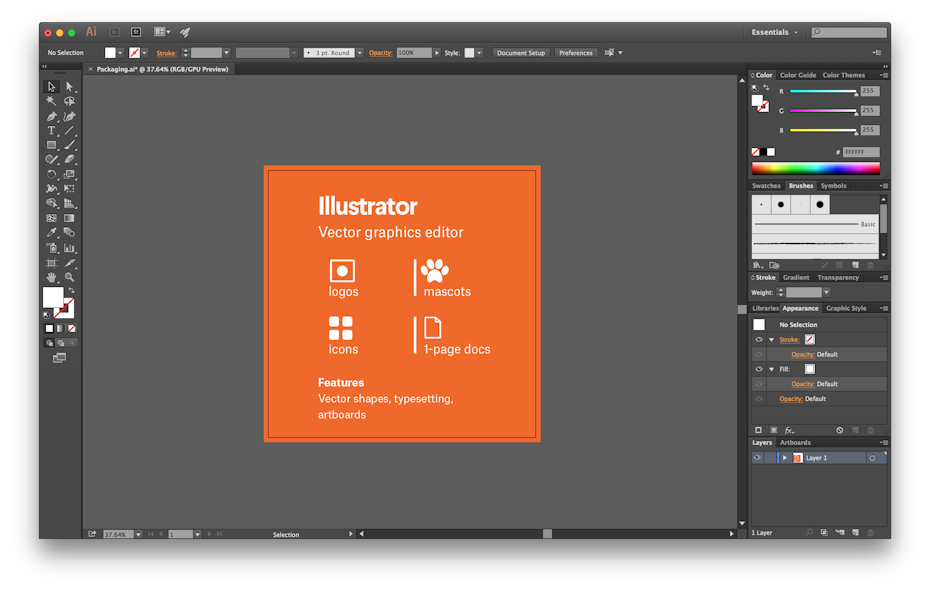
Y'all should use an AI when…
- Yous need to edit a vector design . AI files allow you to move and alter every unmarried element in your pattern with only a click or 2.
- You demand to create a logo, icon or brand mascot . Every vector shape and line created in Illustrator can be diddled upwardly to any size, which makes it platonic for images that demand to be used in many unlike means.
- You want a 1-page print slice . Illustrator is perfect for posters, concern cards, flyers and notecards that can be combined with other raster images.
- You need to set type for a logo. Illustrator's typesetting features are incredibly powerful, enabling any text to exist stretched, skewed and transformed any fashion imaginable.
Don't utilize an AI when…
- Yous need to edit images. If a raster epitome (photo or artwork) is existence used in a composition, Illustrator has a express number of tools to edit that prototype direct. Photoshop (PSD files) can make more comprehensive adjustments like color, contrast and brightness.
Want to find a designer who tin can create all the right file types?
Our designers can do that!
Source: https://99designs.com/blog/tips/image-file-types/
0 Response to "Lets Come Together to Check Our Work Image Clip Art"
Post a Comment